
Field Research on Particulate Matter in the Geirangerfjord
As part of a seven-day field seminar, undergraduate geography students from the University of Bonn joined an ongoing research project investigating particulate matter pollution in the Geirangerfjord. Following a predefined route, the group regularly measured and analyzed concentrations of PM1, PM2.5 and PM10. The aim of the project is to better understand how particulate matter behaves under the unique conditions of a fjord environment and which factors influence its distribution.
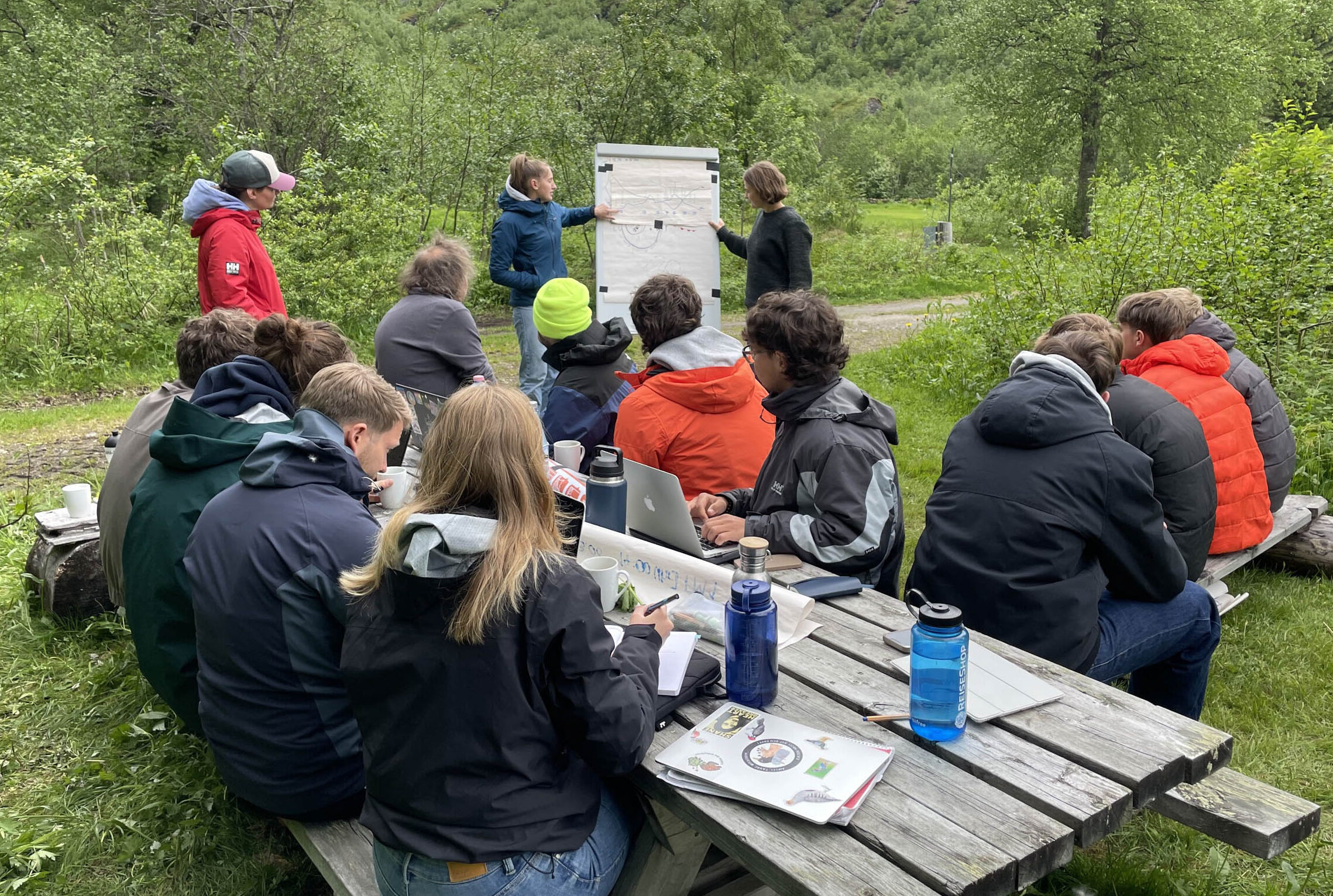
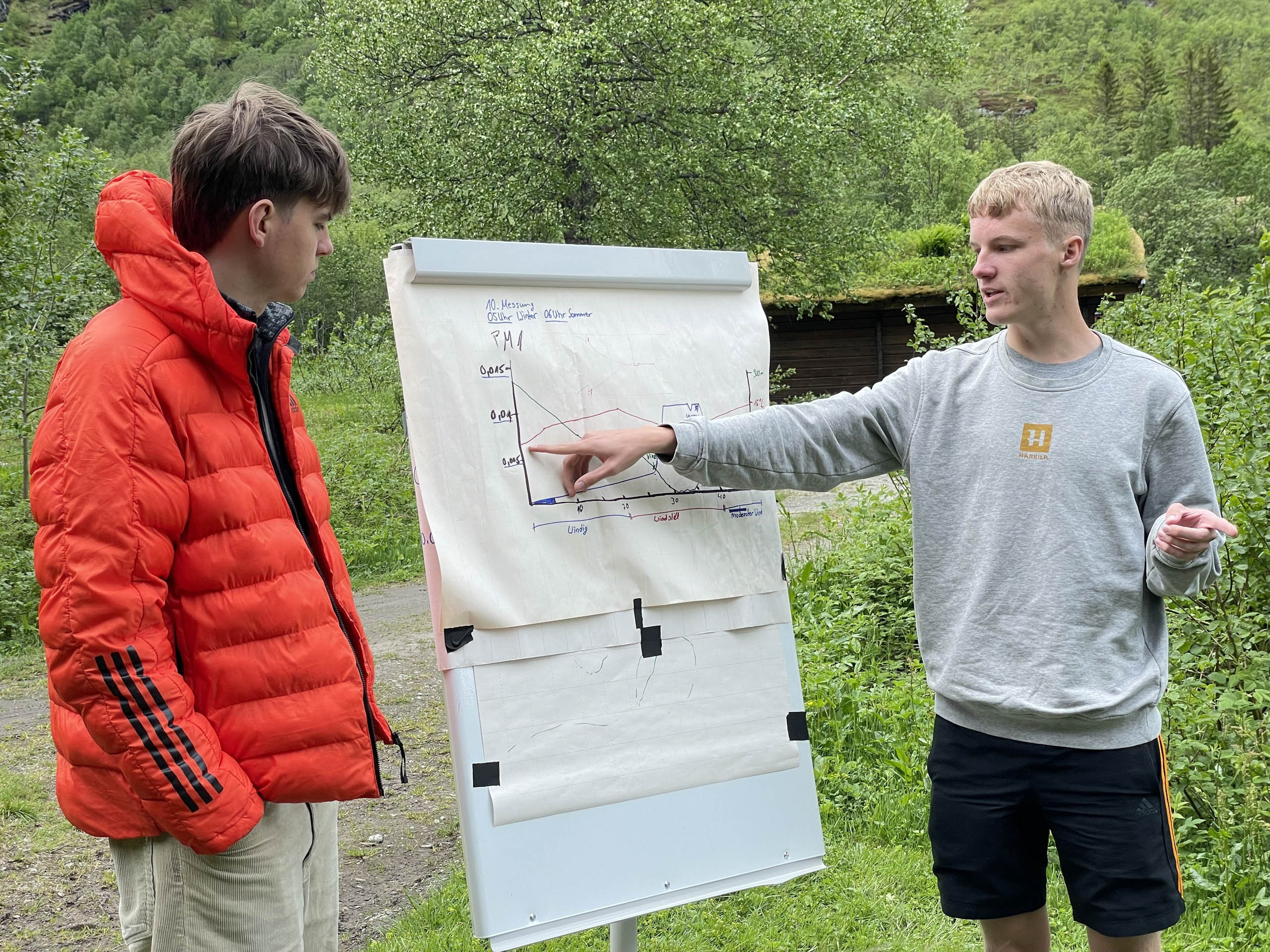
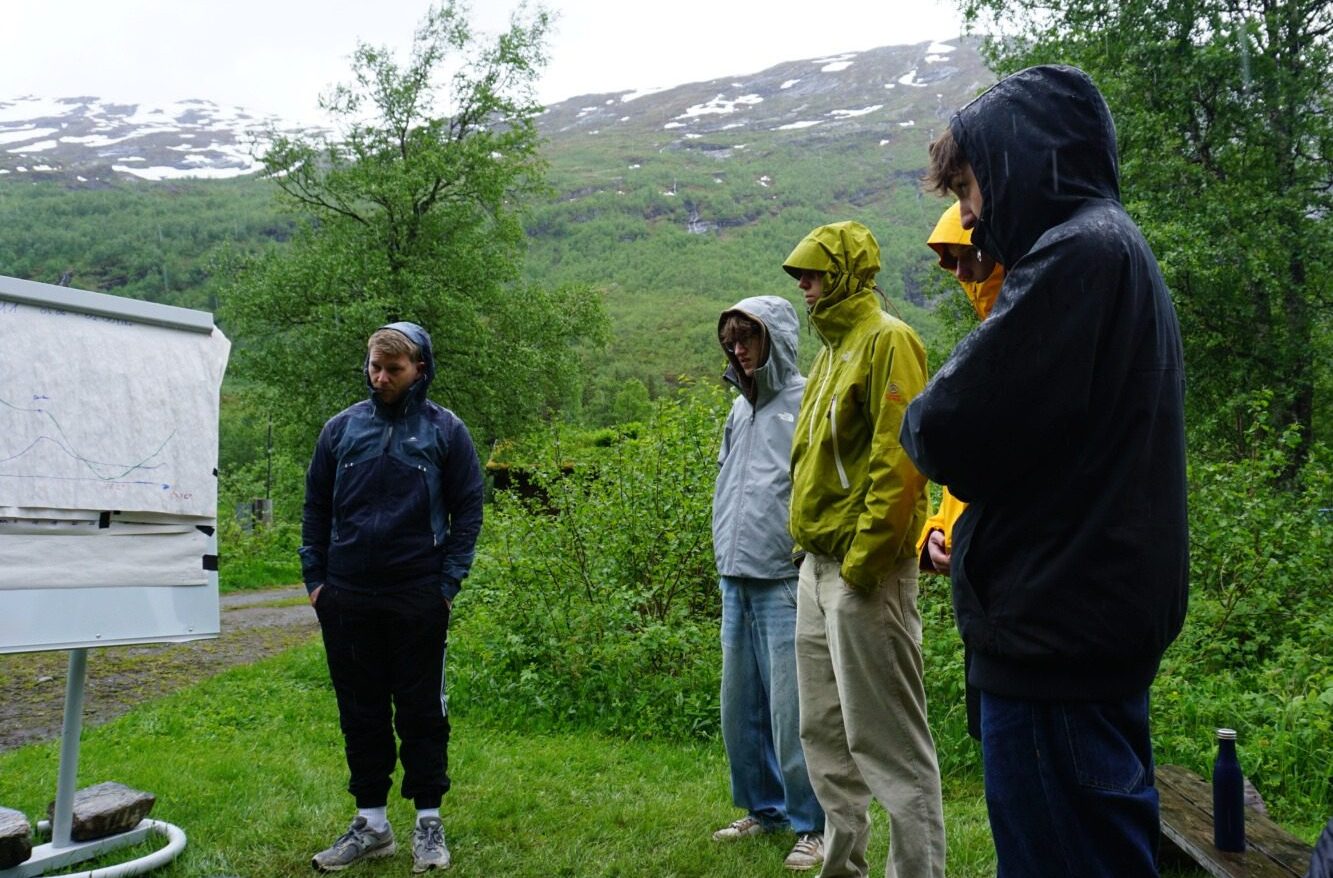
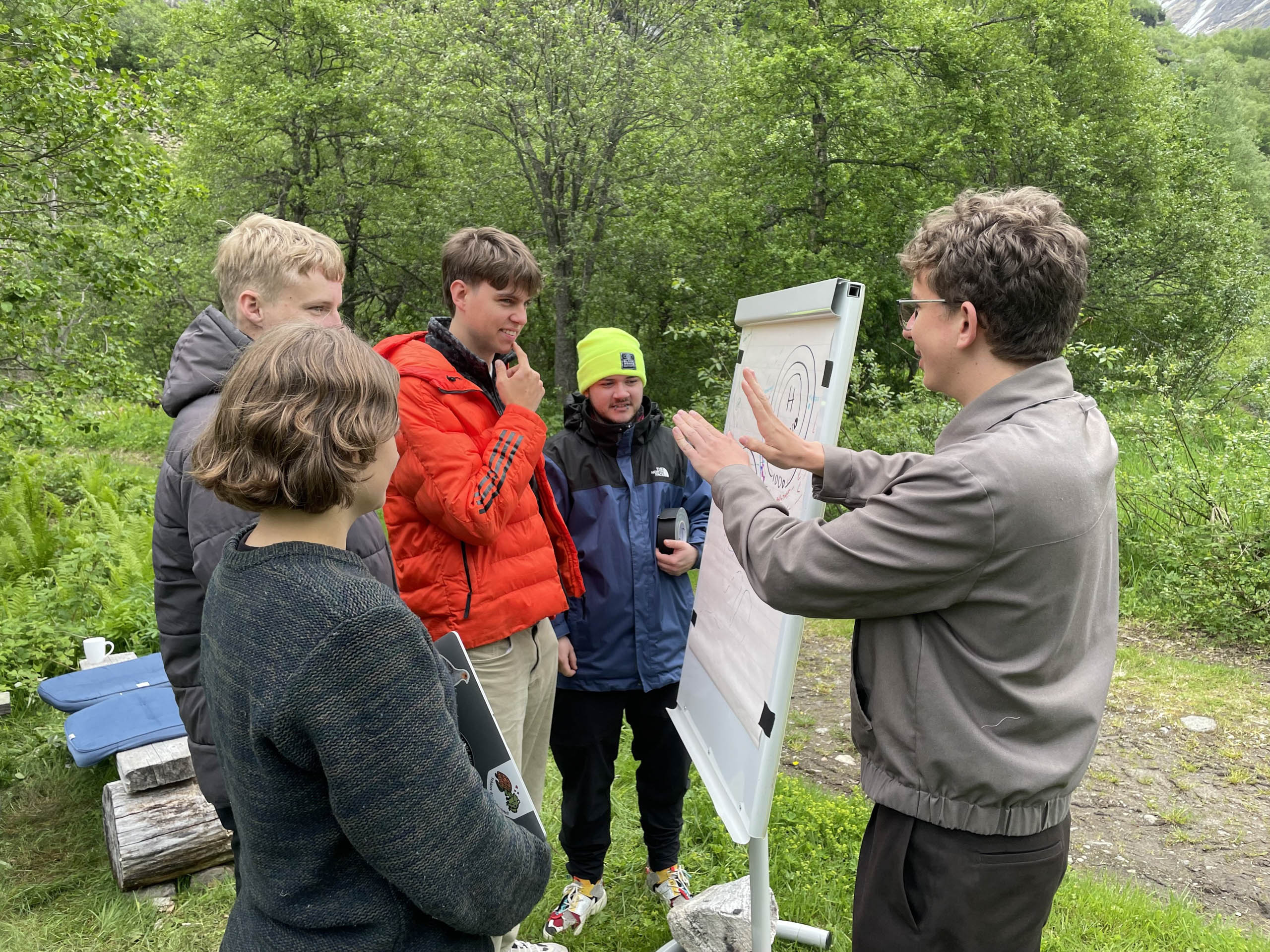
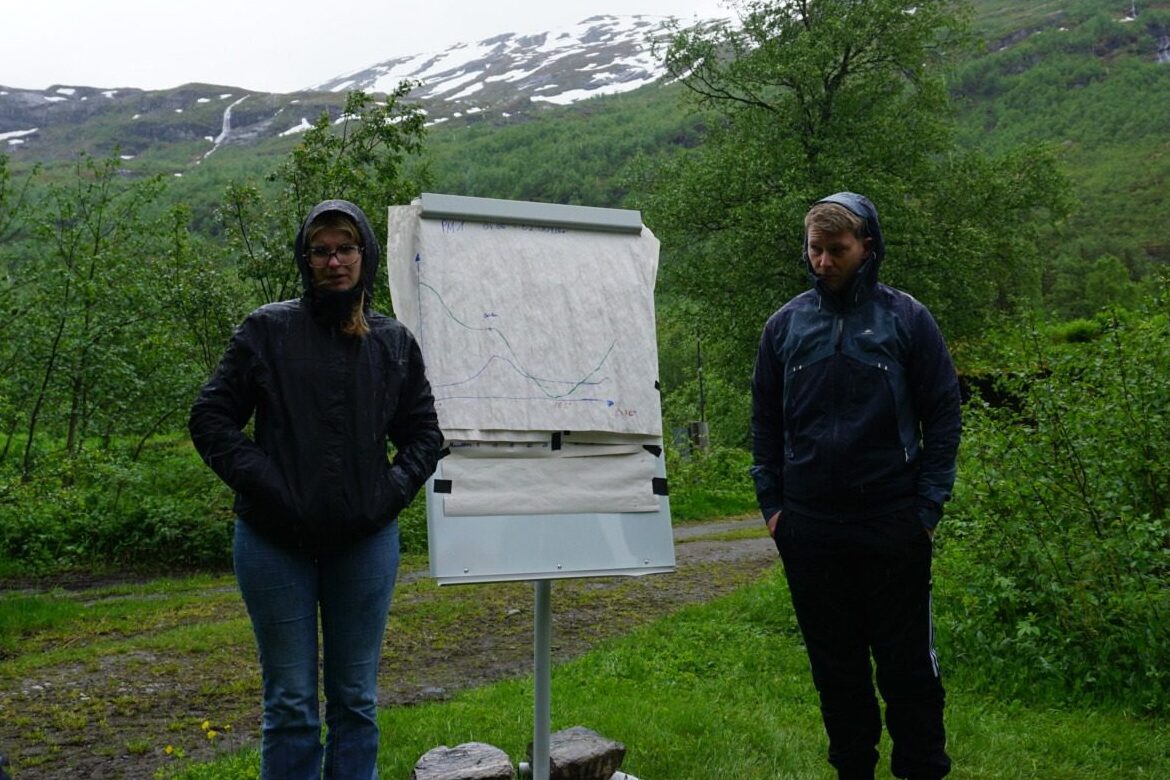
The students discussing their first fieldwork results in their “open-air classroom” during their stay in Geiranger. Photo: Aaron Hager
"I find it fascinating that in a place like the Geirangerfjord, a place most people would associate with clean air and relaxation, comparatively high levels of air pollution can be measured. I’m interested in understanding why this happens here and which weather conditions contribute to it."
Matthis Kühlke
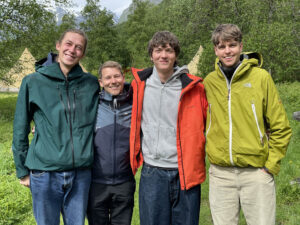
Matthis´statement reflects the central questions of the research project: How do particles move within the fjord? Which meteorological and environmental conditions influence their distribution? And what determines whether they remain within the fjord system or are transported away?
What is Particulate Matter?
Particulate matter (PM) refers to tiny solid or liquid particles suspended in the air. These particles originate from both natural sources and human activities, including combustion processes associated with road traffic and maritime transport.
The most commonly studied size classes are:
- PM10: particles smaller than 10 micrometres
- PM2.5: particles smaller than 2.5 micrometres
- PM1: particles smaller than 1 micrometre
For comparison, a human hair has a diameter of approximately 70 micrometres.
Some particles are emitted directly into the atmosphere, for example through engines or combustion processes. Others form through chemical reactions in the atmosphere. Particulate matter is therefore not a single substance but a complex mixture of particles with different origins, compositions and properties.
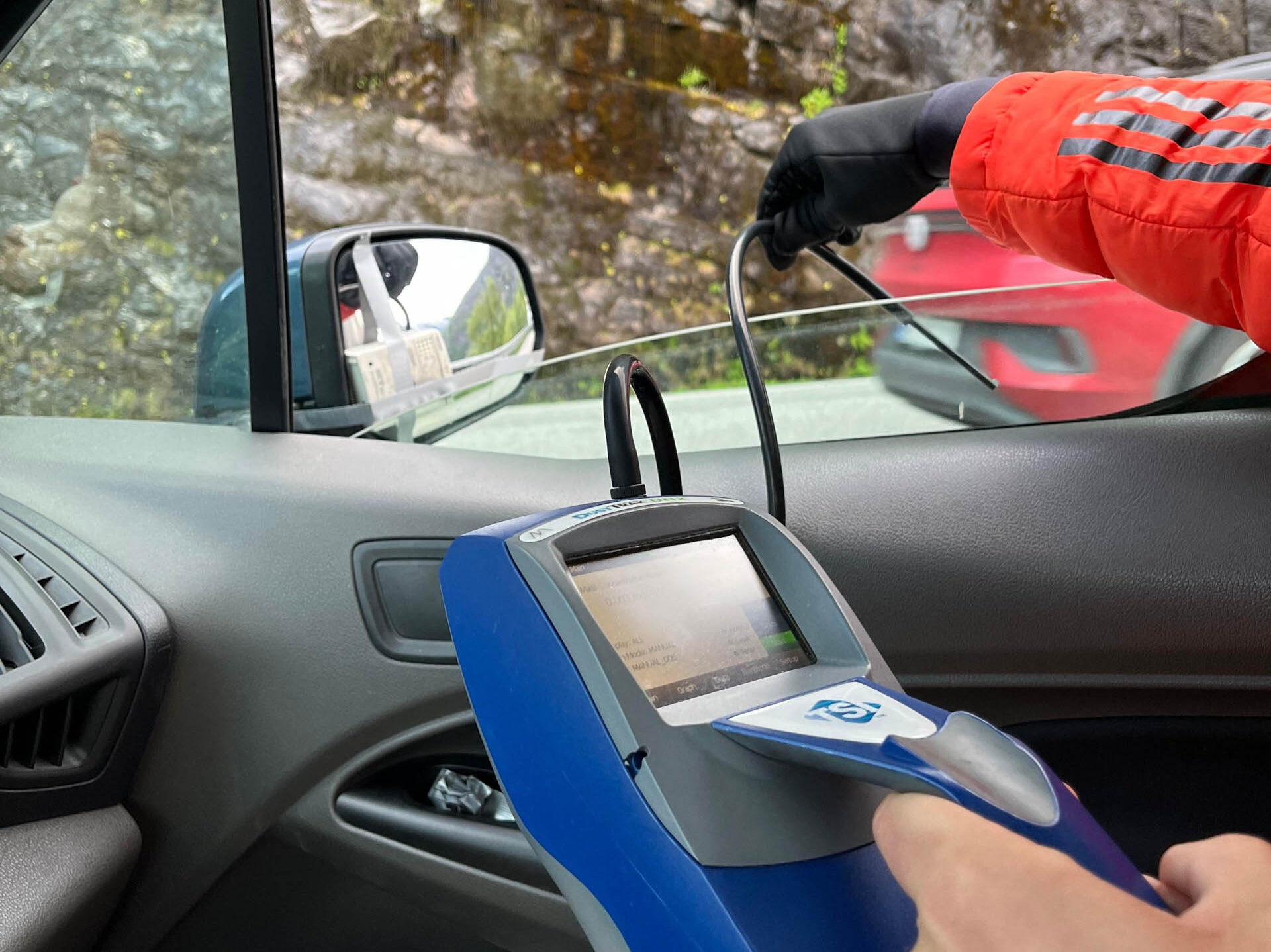
Student conducting particulate matter measurements during a mobile survey in Geiranger. The photograph shows the measurement setup and the instruments used to record airborne particle concentrations during the seminar. Photo: Brian Stommel
Geirangerfjord as a Natural Laboratory
From a scientific perspective, the Geirangerfjord is a particularly interesting study area. Here, two seemingly contrasting realities meet: a UNESCO World Heritage landscape of outstanding natural beauty and an intensive cruise tourism industry during the summer season.
Like all vessels powered by combustion engines, cruise ships emit pollutants, including particulate matter. At the same time, the steep mountain slopes, narrow fjord geometry and constantly changing weather conditions influence how air masses and airborne particles move through the landscape. Air circulation is often more localized and complex than in open coastal regions, resulting in substantial differences in pollutant concentrations even over short distances.
One of the project’s key research questions concerns the vertical transport of particles: while rising air masses can carry particulate matter from the valley floor into higher atmospheric layers, it remains unclear whether these particles are subsequently transported out of the fjord system or remain suspended above the valley and may later descend again under changing meteorological conditions, implying that observed improvements in ground-level air quality could reflect a temporary redistribution rather than an actual removal of particulate matter.
It is precisely this interaction between emissions, weather conditions, topography and vertical air movement that makes the Geirangerfjord such an interesting but also challenging natural laboratory.
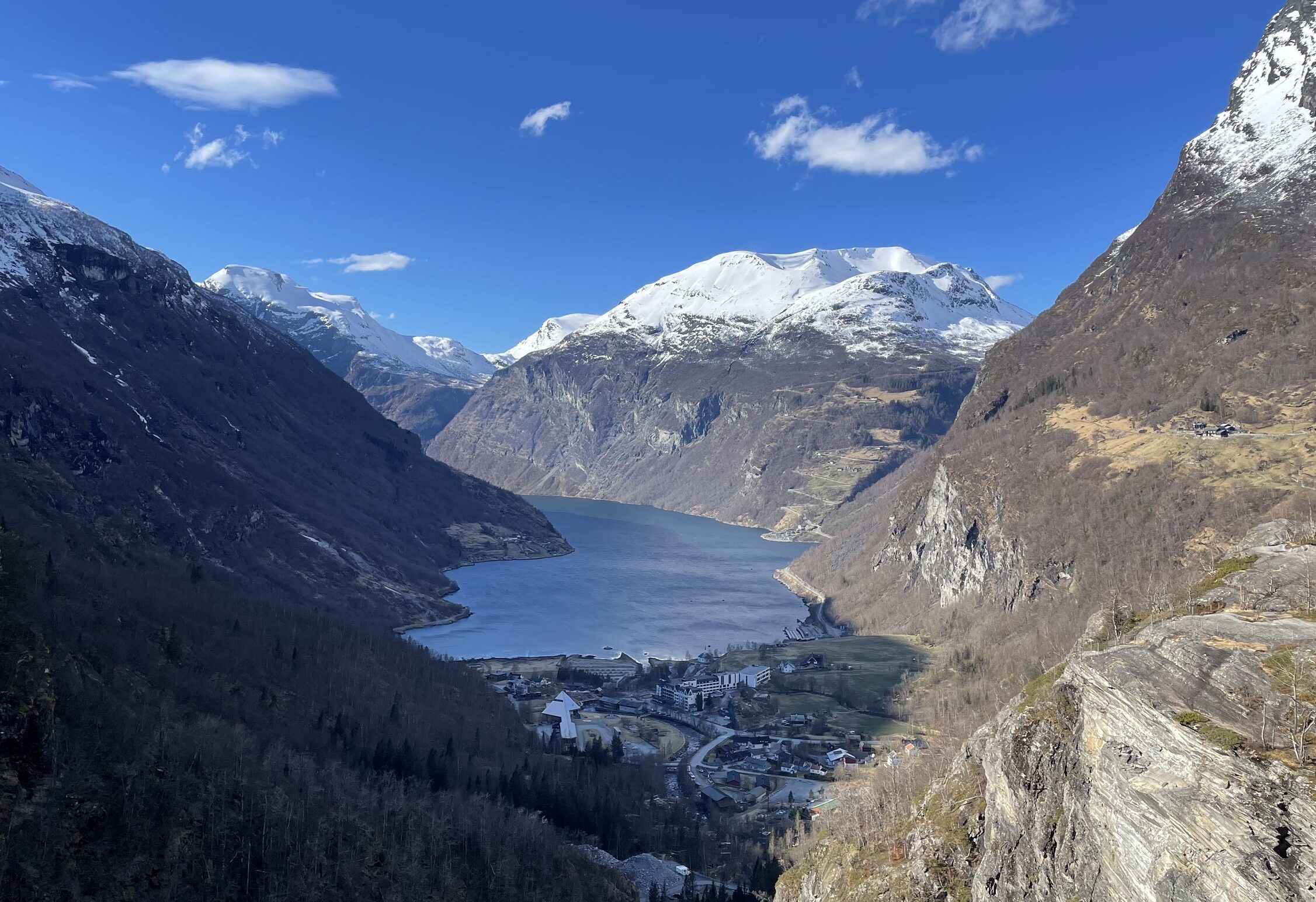
View of the Geirangerfjord from Flydalsjuvet. The fjord’s topography may affect whether particulate matter is transported out of the system or remains temporarily trapped within it. Photo: Aaron Hager
The Problem with Particulate Matter
Particulate matter is one of the most important air pollutants worldwide and represents a significant risk to human health. Its impact is strongly related to particle size: while larger particles are often trapped in the upper respiratory tract, fine and ultrafine particles can penetrate deep into the lungs and reach the alveoli, where gas exchange takes place.
Research has shown that these particles can cross the air–blood barrier in the lungs and enter the bloodstream. Once transported through the body, particle components have been detected in organs such as the heart, liver, kidneys and brain, showing that the effects of particulate matter are not limited to the respiratory system.
Long-term exposure to particulate matter is linked to various health problems, especially respiratory and cardiovascular diseases. The smallest particles are also being investigated for their potential effects on other organs, as they can trigger processes such as oxidative stress and inflammation.
Although much is already known about the health impacts of particulate matter, many questions remain unanswered, especially regarding the smallest particles and their behavior in the environment. Understanding how particles are emitted, transported and redistributed in the atmosphere is therefore essential, not only to assess air quality, but also to better understand human exposure.
Beyond the Measurements
Providing reliable insights into the complex processes controlling particulate matter in the Geirangerfjord requires more than a one-week field campaign. Understanding the interactions between emissions, atmospheric conditions, topography and particle transport is part of a larger, long-term research effort. The results of this ongoing work will provide further insights into how particulate matter behaves within the fjord system.
For the students, the field seminar offered the opportunity to experience how scientific research is conducted in practice. By participating in an ongoing research project, they gained insight into the process behind scientific investigations – from collecting measurements and interpreting observations to dealing with uncertainties and unexpected results. The experience allowed them to connect theoretical knowledge with real-world observations and to better understand the challenges and possibilities of field-based research.
“Every opportunity to apply theoretical knowledge in the field is valuable. You also learn where the limits of theory are and how important it is to take your own ideas seriously and follow them, even as a student.”
Lukas Wegeleben
“It’s exciting to participate in ongoing research. You’re investigating something where it’s not even entirely clear yet what is really going on. You become part of the project and learn how research actually works and how to question situations that don’t necessarily behave the way textbooks suggest they should.”
Florian Blank

Interviewed students of the Project-seminar: Lukas Wegeleben, Florian Blank, Matthis Kühlke, Brian Stommel
References
Farmer, D. K., Boedicker, E., & DeBolt, H. (2021). Dry Deposition of Atmospheric Aerosols: Approaches, Observations, and Mechanisms. Annual Review of Physical Chemistry, 72, 375–397. https://doi.org/10.1146/annurev-physchem-090519-034936
Guha, A. (2008). Transport and Deposition of Particles in Turbulent and Laminar Flow. Annual Review of Fluid Mechanics, 40, 311–341. https://doi.org/10.1146/annurev.fluid.40.111406.102220
Gunasingam, G., He, R., Taladriz-Blanco, P., Balog, S., Petri-Fink, A., & Rothen-Rutishauser, B. (2024). Combining analytical techniques to assess the translocation of diesel particles across an alveolar tissue barrier in vitro. Particle and Fibre Toxicology, 21, Article 26. https://doi.org/10.1186/s12989-024-00585-7
Zhang, Y., Li, S., Zhang, X., & Wang, Y. (2024). Adverse effects of exposure to fine particles and ultrafine particles in the environment on different organs of organisms. Journal of Environmental Sciences, 135, 449–473. https://doi.org/10.1016/j.jes.2022.08.013
Written by Aaron Hager